

A ribbed aero base layer (red bumps) worn under a smooth jersey sleeve (blue) trips airflow on the arm to reduce drag. The principle is backed by research: NTNU found that just 1×1 mm raised strips under a smooth surface can significantly cut aerodynamic drag. In cycling this idea has caught on – riders (even pros) now commonly wear ribbed aero sleeves or base layers under tight jerseys to “trip” the air and shrink the wake behind their arms. Darevie’s Aero Base Layer copies this concept: it’s a lightweight 100% polyester undershirt with a perforated mesh torso and raised vertical stripes on the sleeves, designed to be worn under a race jersey. In short, it follows the same design as high-end aero layers – a smooth mesh chest for cooling, plus textured arm panels for airflow control.
Materials and Design
Product detail: Darevie’s aero base layer uses a white pinhole mesh for the main body and striped stretch fabric for the sleeves. In effect it’s a “dual-layer” garment: the mesh torso lets sweat vapor through, while the raised-rib sleeves act like tiny trip strips to disturb the airflow. This matches designs from top brands: for example Castelli’s Bolero SS base layer also pairs an open-mesh body with aerodynamic ribbed sleeves. The Darevie ribs (about 1–2 mm high) are similar to those on aero socks or specialized tri-suits – their goal is to create many small vortices that delay flow separation on the cylinder-like upper arm. One detail: Darevie’s sleeves are quite long (extending below the elbow), which some riders warn may bunch under a short-sleeve jersey. Overall, the materials are basic (just thin polyester), but conceptually valid for aero benefit.
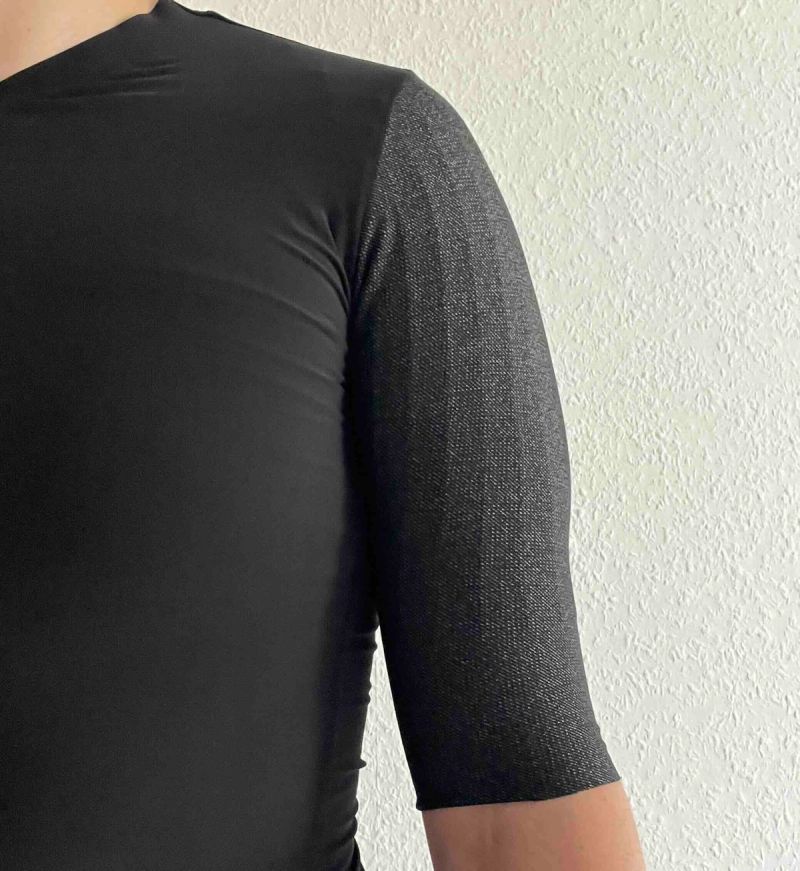
In person fit of the darevie aero baselayer
In Practice
In the field, the Darevie baselayer feels like a very light summer undershirt. The fabric is extremely breathable and wicks sweat well, so it keeps you cool on hot rides (comparable to other performance base layers). We didn’t measure any immediate speed gains ourselves – as one tester joked, feeling a multi-watt benefit without a wind tunnel is nearly impossible.
Independent wind-tunnel tests (on other baselayers) show that aero layers can save on the order of 10–20+ watts, but the advantage only materializes if the layer fits perfectly. In our rides, the Darevie layer stayed dry and comfortable, but we noticed no obvious extra push from it.
What did stand out was fit: Darevie’s sizing is inconsistent. Multiple users report that the “Asian” cut runs large – even a marked “Small” could seem roomy. One forum member noted the medium was big on someone who normally wears small in Euro brands. Another tried tailoring it and still found it “just fits poorly” with excess fabric bunching under the jersey. We saw the same: unless you size down sharply, the sleeves and back panel can wrinkle. Such slackness would actually hurt aero performance, so it’s crucial that the ribs lie flat. In short, the layer functions fine as an undershirt, but its alleged drag-cutting relies entirely on a snug fit. If it flaps or wrinkles, any aerodynamics gains disappear.
In person fit of the darevie aero baselayer
Comparisons & Market Context
-
Castelli Bolero SS: ~80 €, high-quality construction, proven in pro racing.
-
Rule28 Aero Baselayer: Premium price (~£145), used in time trials, proven fit.
Darevie’s selling point is price: at ~$20 it’s far cheaper than any true aero-specific layer.
Rating Table
<Table
columns={[
{ Header: 'Category', accessor: 'category' },
{ Header: 'Rating (★/5)', accessor: 'rating' },
{ Header: 'Comments', accessor: 'comments' },
]}
data={[
{ category: 'Aerodynamics', rating: '★★★★☆ (4/5)', comments: 'Proven ribbed design. Actual gains depend on perfect fit.' },
{ category: 'Fit & Sizing', rating: '★★☆☆☆ (2/5)', comments: 'Inconsistent sizing; users report bunching and slack fabric. (Try one size smaller: I normally wear EU M, so next time I buy EU S)' },
{ category: 'Comfort & Breathability', rating: '★★★★☆ (4/5)', comments: 'Very lightweight and breathable; stays cool in hot weather.' },
{ category: 'Material Quality', rating: '★★★☆☆ (3/5)', comments: 'Basic polyester construction; functional but simple.' },
{ category: 'Value for Money', rating: '★★★★★ (5/5)', comments: 'At ~$20, unbeatable entry point to test aero layering concepts.' },
]}
/>
Overall Score: ★★★★☆ (3.6/5)
A conceptually solid, budget-minded aero base layer with potential – but only if you get the fit right. Otherwise, it’s a breathable undershirt with aero ambitions.
Conclusion
The Darevie Aero Base Layer delivers the same aero-concept as high-end versions, and theory suggests it can reduce drag if worn exactly as intended. Wind-tunnel data indicate ribbed sleeves can save on the order of tens of watts, but only with perfect fit – and Darevie’s budget cut shows in the fit. User feedback and our experience warn that if the layer doesn’t lay perfectly smooth, it will not help (and may even hurt) your aerodynamics.
On the upside, the layer is cool and comfortable in hot weather, and it’s so inexpensive that savvy riders can experiment with it at low risk.
sweet / sour – Conclusion
🥭 sweet
-
Budget-friendly: Much cheaper than high-end aero base layers from premium brands.
-
Science-based concept: Leverages the principle of surface disruption to reduce drag.
-
Potential gains: Enthusiasts who optimize fit may achieve marginal aero benefits.
🍋 sour
-
Fit issues: Requires careful sizing (often downsizing), tucking, and even tailoring to perform well.
-
Inconsistent benefit: Performance depends heavily on body shape, jersey fit, and position.
-
Limited appeal: Feels more like an experimental undershirt than a reliable performance upgrade.
Recommended for: Aero-conscious road cyclists, crit racers, TT enthusiasts looking to test drag-reduction gear without breaking the bank.
Sources:
-
NTNU (Norwegian University of Science and Technology) studies on ribbed airflow.
-
Independent wind tunnel tests on base layers and fabrics (e.g. Tour Magazin).
-
User reports from Reddit, WeightWeenies, and personal experience.
Disclosure: We purchased this product ourselves for independent testing and were not compensated by the manufacturer. Our review reflects our genuine experience with the product.


