

The Eastern carbon road frame scene has matured rapidly, no longer defined solely by value but by distinct engineering philosophies and clear design intent. What was once a market dominated by cheap imitations has evolved into a landscape of refined, competitive, and often visionary products. This article takes a closer look at five standout contenders — the VeloBuild Aero Trace 368, Tantan X67, Yoeleo G21 Altera, Quick Pro ER:One, and Winspace T1600 — to understand how each one embodies a different idea of performance. Instead of comparing them point by point, each frame is explored in full, from construction and geometry to its ideal rider profile.
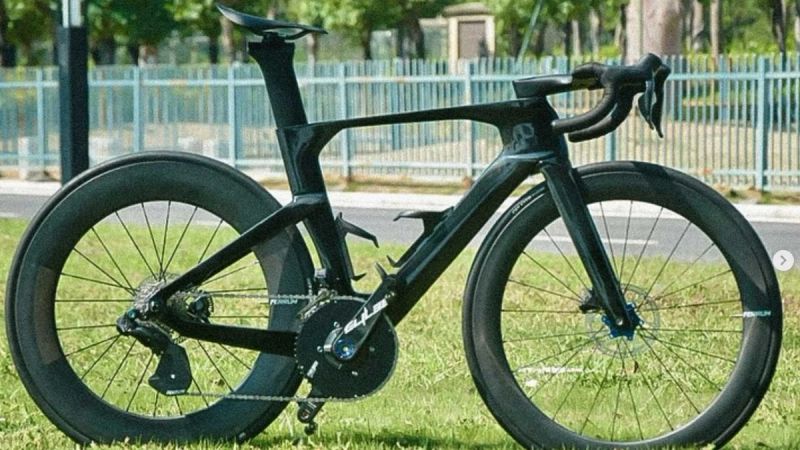
VeloBuild Aero Trace 368
The VeloBuild Aero Trace 368 represents the most accessible path into modern aerodynamic road geometry. Built from Toray UD carbon with a simplified layup, it aims to deliver the visual and aerodynamic benefits of a true aero bike at a fraction of the cost. The frame weighs around 1,050 grams in a size 52, which is not competitive by elite standards, but its stiffness and structural integrity are impressive given the $529 price point. The design language borrows from established Western aero trends — deep truncated tube profiles, integrated cabling, and a full internal routing system that keeps the frame looking clean and modern. For budget-conscious riders or those piecing together a secondary bike, it is a remarkably solid platform that doesn’t feel compromised in everyday riding.
Geometry-wise, the Aero Trace 368 strikes a balanced stance between comfort and aggression. The stack-to-reach ratio hovers around 1.37 to 1.40 across the size range, meaning it accommodates a typical performance-oriented posture without forcing the rider into an extreme position. The constant 410 mm chainstay and moderate head-tube angles ensure predictable handling and decent rear-end stiffness, making the bike stable under power yet easy to control at speed. It’s a geometry that feels “right” — responsive but not twitchy, aero but not overly stretched.
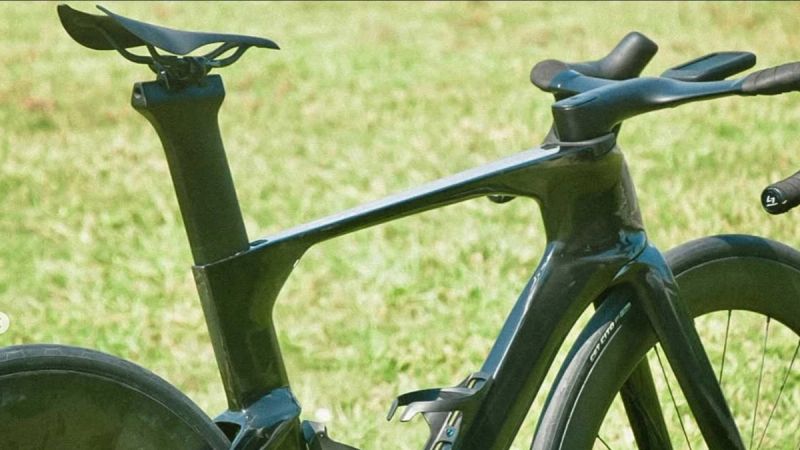
The appeal of the VeloBuild lies in its accessibility. For riders who are new to aero road frames, this bike offers a way to experience that geometry and aesthetic without spending thousands. It’s also a popular choice for those experimenting with aggressive fit positions before investing in a high-end frame. The trade-offs are clear — more weight and a simpler carbon layup — but the structure itself is sound, and the ride quality doesn’t feel cheap. The Aero Trace is, in many ways, a proof of concept: that an entry-level frame can deliver an authentic aero experience without being disposable.
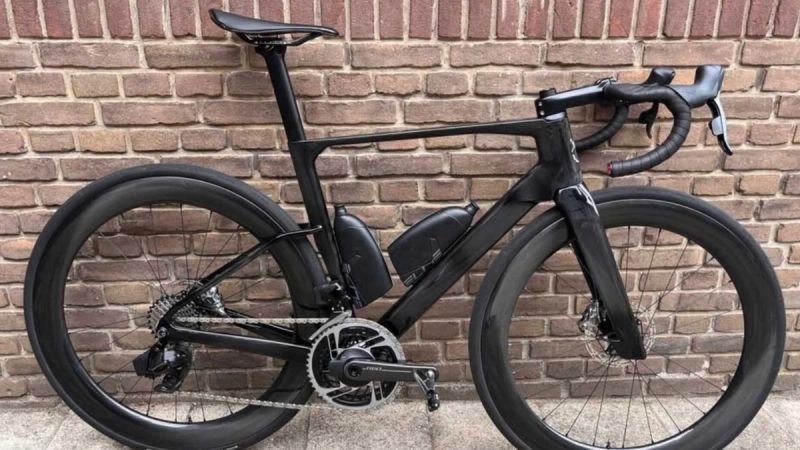
Tantan X67
The Tantan X67 approaches road performance from the opposite direction: instead of focusing on affordability, it pursues the lightest possible structure within reach of serious amateurs. Constructed entirely from Toray T1000 carbon in a monocoque design, the X67 reflects Tantan’s precision-driven philosophy. Every surface, junction, and carbon ply exists to shave grams while maintaining stiffness. With a raw frame weight of around 923 grams, it enters a category previously reserved for boutique Western climbing frames costing several times more. This frame isn’t chasing aesthetic trends — it’s built for riders who understand the tangible performance gains of reduced mass on sustained climbs or constant accelerations.
In terms of geometry, the X67 prioritizes stability and responsiveness over comfort. A consistent 405 mm chainstay length keeps the rear triangle compact and lively, while a 72 mm bottom bracket drop and moderately steep head tube angles maintain balance between agility and predictability. The stack-to-reach ratios scale intelligently across sizes, keeping smaller sizes sharp and race-focused while giving larger frames a slightly longer, more composed stance. The result is a frame that rewards precise input and aggressive riding, particularly when dancing out of the saddle on climbs or sprinting through rolling terrain.
At a price that ranges between $1,200 and $2,300 depending on configuration, the X67 sits squarely in the mid-premium range, but its specifications justify that investment. The full T1000 construction, the low weight, and the restrained geometry make it one of the most performance-oriented Eastern frames available today. It’s a bike that rewards commitment: riders who prioritize lightweight responsiveness and pure climbing efficiency will find it transformative, while those looking for comfort or versatility will need to look elsewhere. The X67 is not built to compromise; it’s built to win on gradient and acceleration.
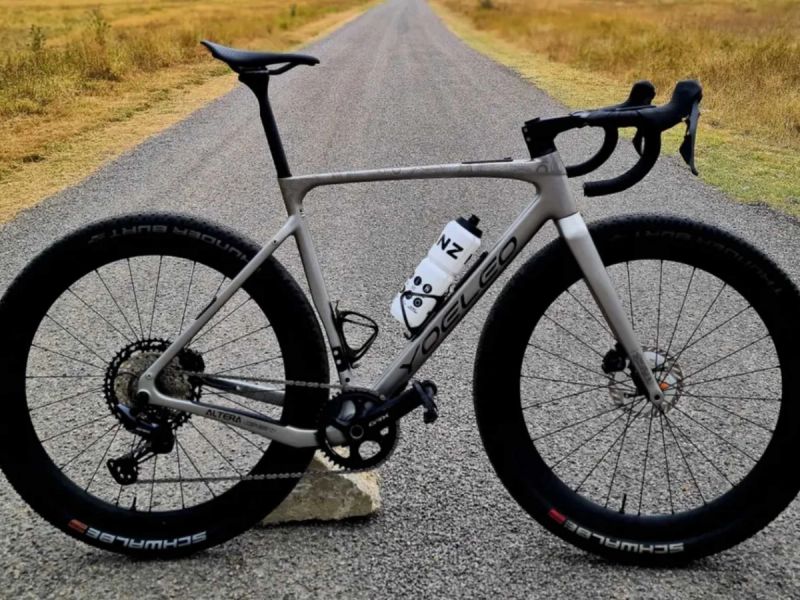
Yoeleo G21 Altera
While most carbon road frames chase lighter weights or sharper aerodynamics, the Yoeleo G21 Altera deliberately goes in another direction. This is a frame designed for riders who blur the line between road and gravel, valuing reliability and real-world functionality over theoretical gains. Constructed from Toray T800 carbon, it sacrifices the marginal stiffness of higher-modulus fibers in favor of durability and ride comfort. At 1,170 grams in a size 56, it’s slightly heavier, but the additional mass comes with tangible benefits: a more compliant ride, improved toughness, and the ability to handle rough surfaces without fear of structural fatigue. The frame integrates features that show practical thinking — internal frame storage, a threaded T47 bottom bracket for easier maintenance, and compatibility with both mechanical and electronic drivetrains.
The geometry reinforces this all-road character. With relatively slack head tube angles and longer 433 mm chainstays, the G21 feels composed over broken pavement and gravel tracks. Its stack-to-reach ratio increases noticeably across sizes, from a racy 1.37 in the smallest frame to a comfortable 1.62 in the largest, offering progressively more upright positions for taller riders. This flexibility, combined with generous tire clearance up to 48 mm, makes the Altera a genuinely versatile chassis — capable of being built as a fast endurance road bike or a light gravel explorer.
Priced around $1,278 with frequent discounts, the G21 occupies a thoughtful middle ground between affordability and refinement. It includes a full suite of accessories, extra hangers, adapters, and grommets — details that indicate an understanding of real-world riders who build and maintain their own bikes. For those who value reliability, comfort, and versatility more than sheer speed, the Yoeleo G21 Altera represents one of the most mature and well-balanced designs to emerge from the Eastern carbon scene.
Quick Pro ER:One
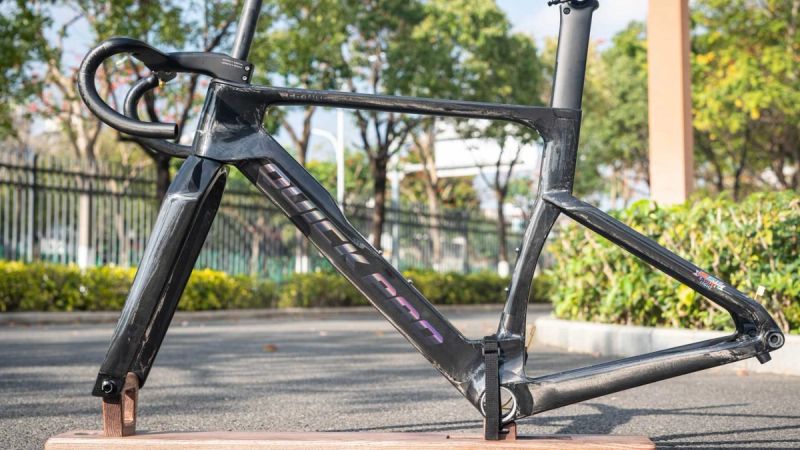
The Quick Pro ER:One is the Eastern interpretation of a purebred crit and flat-race machine — lean, uncompromising, and engineered with an obsessive focus on speed. Built with a blend of Toray T1100 and M65 carbon, the ER:One achieves a sub-850 g frame weight in its smaller sizes, with UCI approval and modern compatibility features like UDH for future drivetrain standards. Its construction feels meticulous; the frame is stiff, precise, and exacting in its tolerances. Every tube profile and junction has been shaped to reduce frontal drag and sharpen response, producing a frame that begs to be ridden fast and aggressively.
The geometry mirrors this racing intent. With a 70 mm bottom bracket drop, steep head tube angles, and consistent proportions across all sizes, the ER:One maintains the same sharp personality regardless of frame size. It’s designed to accelerate hard, carve corners, and stay planted during sprints. The limited 32 mm tire clearance reinforces that focus — this is not a bike for comfort or versatility. It’s a platform for riders who know exactly what they want: pure, aerodynamic speed on smooth roads.
At around $1,900 to $2,200, it sits firmly in the premium category but delivers materials and performance comparable to high-end Western race frames costing twice as much. It’s a frame for those who compete seriously or train with racing intensity. The Quick Pro ER:One rewards discipline: it rides fast, feels brutally efficient, and handles with the poise of a thoroughbred. Riders looking for a do-it-all frame will find it too focused, but those chasing performance metrics and raw speed will appreciate its clarity of purpose.
Winspace T1600
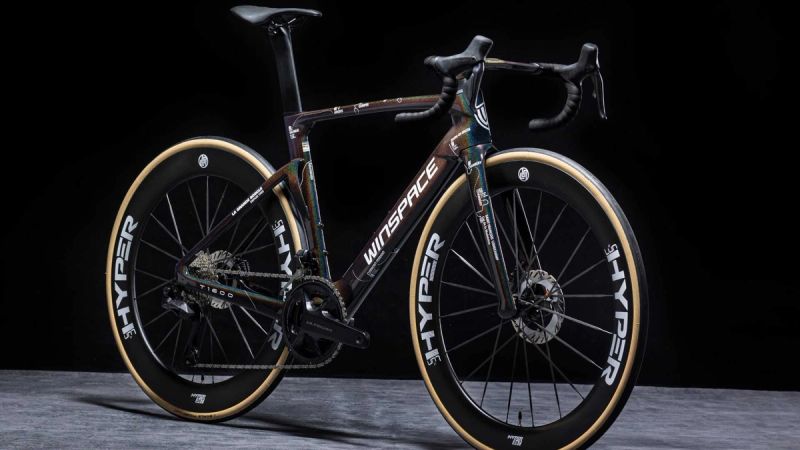
The Winspace T1600 stands apart as perhaps the most complete and technically validated of the group. It combines high-modulus carbon layers (T800, T1000, T1100) with Kevlar reinforcement in critical zones, achieving both stiffness and impact resistance. More importantly, its aerodynamic performance is backed by wind-tunnel testing, demonstrating measurable gains of roughly 5.5 watts over its predecessor at race speeds. At around 900 g unpainted in a medium size, it offers an appealing balance between lightweight construction and structural reliability. What truly distinguishes the T1600 is the attention to detail: precision in bearing alignment, consistent resin control, and refined finishing quality. It feels like a frame built to tight tolerances rather than mass-produced.
The geometry strikes a well-judged balance between aggressive aero posture and all-day manageability. It’s sporty without being extreme — a frame that encourages you to ride fast but doesn’t punish long efforts. The handling is composed and confidence-inspiring, with the aerodynamic shaping of the fork and seatpost contributing not just to speed but to stability at high velocity. Available in smaller, performance-oriented size ranges (44–54 cm), it’s tailored to riders with a racing or enthusiast background who appreciate nuanced handling and refined fit rather than just numbers on paper.
At $2,400 for the frame or $2,800 with the integrated Kevlar cockpit, the T1600 is positioned as a premium Eastern product, and justifiably so. Unlike some competitors that rely on visual appeal or unverified performance claims, Winspace provides data, controlled testing, and consistent quality control. For serious cyclists who want tangible aerodynamic advantages without Western-brand markups, the T1600 is a standout example of what modern Chinese manufacturing can achieve when it prioritizes engineering over imitation.
⸻
Final Thoughts
Eastern carbon frames have progressed far beyond the early era of cheap copies and vague claims. The current generation reflects a spectrum of genuine design philosophies: VeloBuild’s accessible experimentation, Tantan’s pursuit of weightlessness, Yoeleo’s practical versatility, Quick Pro’s racing precision, and Winspace’s engineered validation. None of these are poor choices; each speaks to a different type of rider. The question is no longer whether an Eastern frame is “good enough,” but rather which design philosophy matches your goals. Whether you chase value, weight, durability, aerodynamic gain, or engineering credibility, the options are no longer limited — they’re competitive, diverse, and increasingly world-class.
⸻
VeloBuild Aero Trace 368
<Table design={7.5} geometry={7.0} value={9.5} />
Tantan X67
<Table design={8.5} geometry={8.0} value={8.0} />
Yoeleo G21 Altera
<Table design={8.0} geometry={8.5} value={8.5} />
Quick Pro ER:One
<Table design={9.0} geometry={9.0} value={7.5} />
Winspace T1600
<Table design={9.5} geometry={9.0} value={8.5}
/>


